
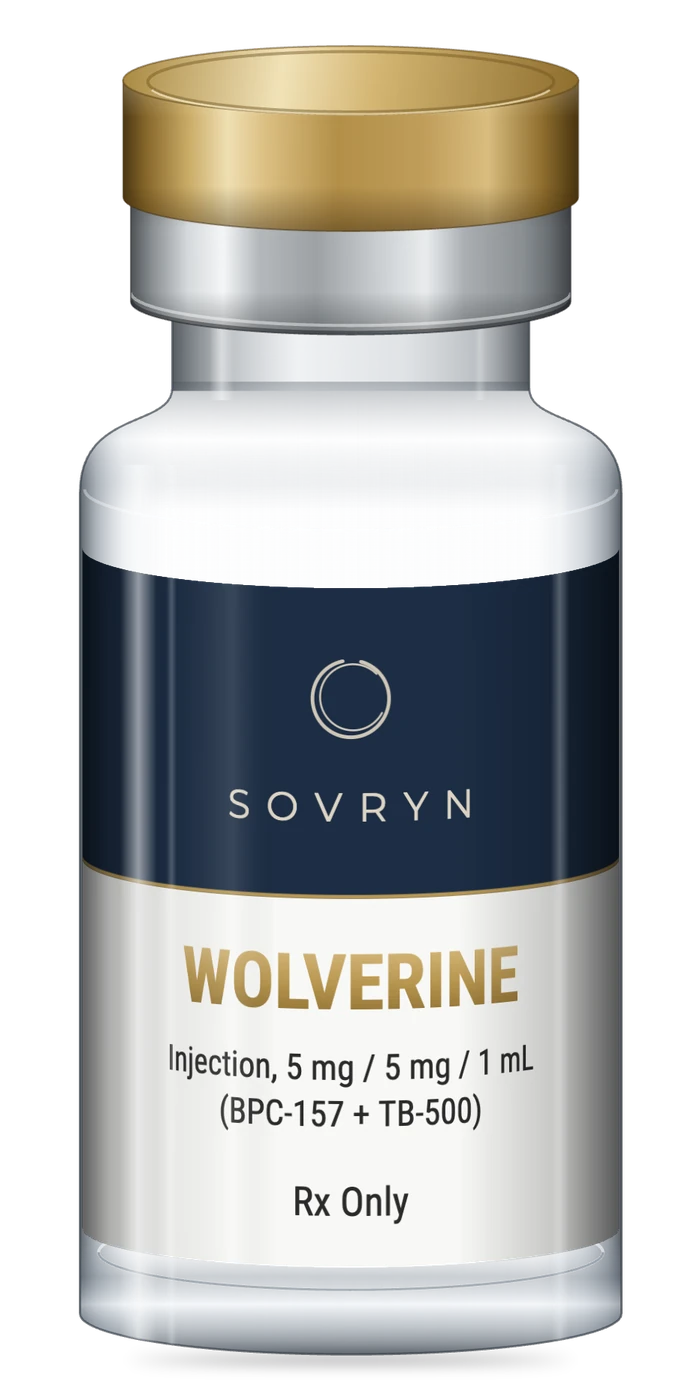
Wolverine
A two-peptide stack pairing BPC-157 and TB-500, both studied for tendon, ligament and soft-tissue repair. Nearly all of the research is in cells and animals, and we show you exactly what exists.
How it is offered
Priced With Your Plan
Pricing
Your clinician sets the plan. Pricing is shown before you authorize any charge.
Peptide stacks require a written prescription from a licensed clinician and are prepared by a licensed pharmacy for an individual patient. The compounds are not FDA-approved or evaluated for safety, effectiveness or quality, and they have not been studied together in controlled human trials. Evidence standards.
Start Your Assessment →What Is Wolverine?
Wolverine is a peptide stack: BPC-157 and TB-500 together, used for tendon, ligament and soft-tissue recovery. Both are studied mostly in animal models of repair.
Neither has large human trials, and the pair has almost none. We lay out what the published research does and does not show, peptide by peptide, so you can decide with a clinician.
Good to Know
- Prescribed only after a clinician reviews your history.
- Dose and course are set by your clinician, not by you.
- Results vary, and we do not promise outcomes.
2 Peptides
What Is in It
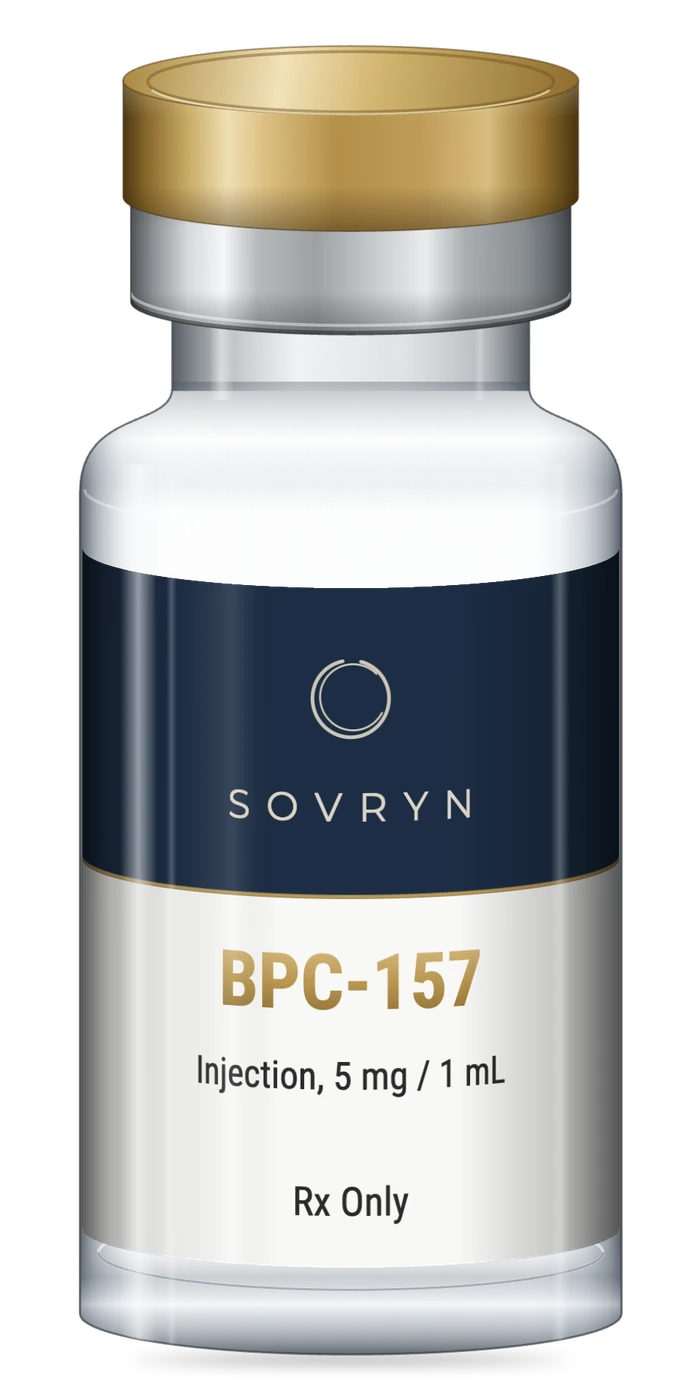
Repair signaling
BPC-157
A 2025 systematic review found 36 studies, 35 of them preclinical. Animal work reports better tendon, ligament, muscle and bone healing. No clinical safety data were found.
On FDA's Category 2 safety-risk page.
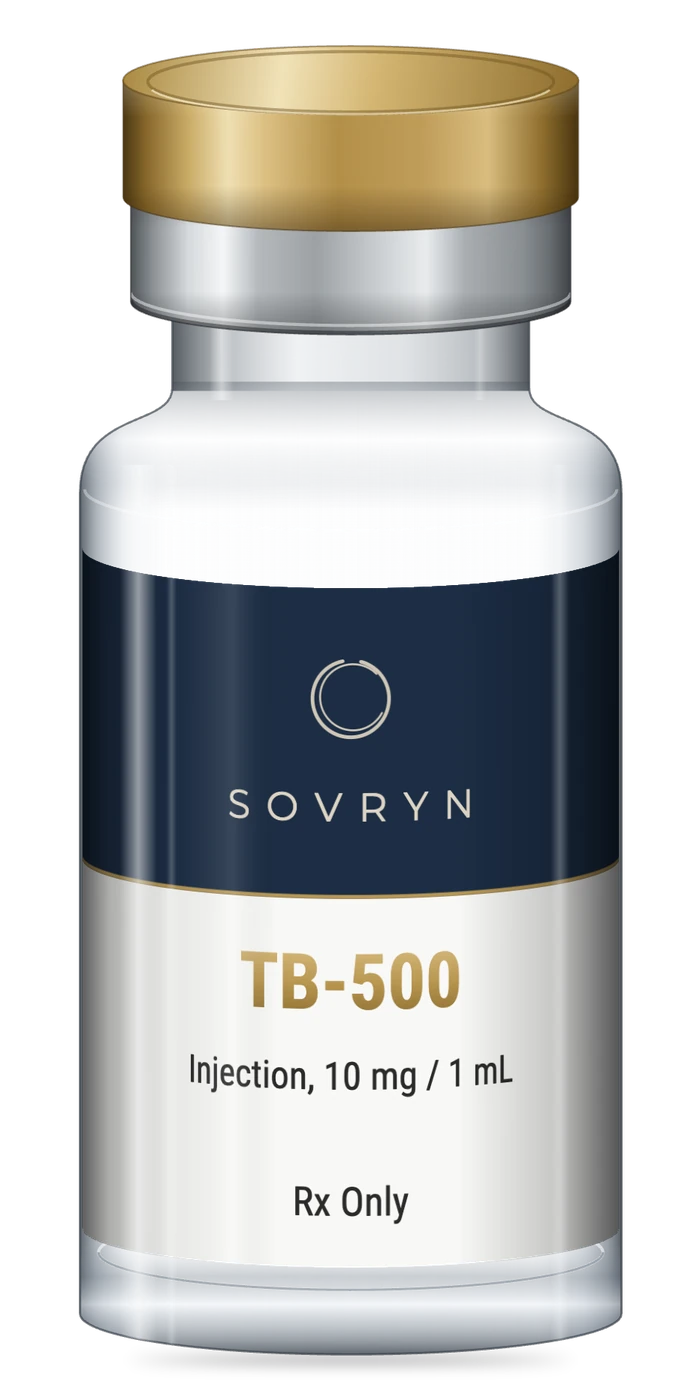
Cell migration and tissue repair
TB-500
A synthetic fragment related to thymosin beta-4. Most research is on full-length thymosin beta-4 in cells and animals, and in people mainly in eye and skin-wound settings. A 2026 review found only one study of TB-500 itself.
On FDA's Category 2 safety-risk page.
Who It Is For
Eligibility
Competitive Athletes
BPC-157 and TB-500 are both on the WADA Prohibited List. A prescription does not establish sporting eligibility, so we ask about anti-doping rules before presenting any option.
Often a Good Fit If
- ✓A tendon, ligament or soft-tissue injury that has not resolved with standard care
- ✓Willing to pair it with physical therapy or a structured return to training
- ✓Comfortable with very limited human safety data
- ✓Open to a defined course with a clinician-reviewed endpoint
Not Prescribed If
- —Pregnancy, breastfeeding, or actively trying to conceive
- —Active or recent cancer diagnosis, or a history your clinician judges to carry risk
- —Expecting a guaranteed or fast outcome rather than a considered trial
- —Subject to anti-doping rules that prohibit these compounds
Read Before You Decide
Key Risks, Stated Plainly
Combining peptides multiplies the unknowns. For each compound alone, human safety data are limited. For the combinations there are almost none. Reported effects in the limited data include injection-site irritation, headache and nausea, and long-term effects are not known. Several of these peptides are studied for promoting new blood vessel growth and cell migration, which is a theoretical reason for caution in anyone with a cancer history.
Contact care the same day for
Significant swelling or pain at an injection site, signs of allergic reaction, chest pain, shortness of breath, or any new or unexplained symptom during a course.
What Is Measured
Baseline Function and Symptoms
A baseline you rate at the start, so a change can be compared with it.
Injection-Site Tolerance
Reviewed early, when most reactions appear.
Training or Activity Load
What you can do compared with what you could before.
Anti-Doping Check
Competitive athletes are screened against current sport rules first.
Course Endpoint
A scheduled reassessment against your original goal, with a written decision.
A Clearer Path Forward
How Clinicians Review Your Response
You and Your Clinician Look at the Same Data
Symptoms you report, laboratory results and, if you connect one, wearable trends are reviewed together before any change.
A Physician-Led Review Every 90 Days
Included in your monthly price. Your clinician decides whether to continue, adjust the dose, change course or stop.
Clinical Judgment Decides
Measurements inform the decision. They do not make it, and no dashboard changes your dose on its own.
Your Care Sequence
01
Questionnaire
Share your goals, history and any sport or work rules in about ten minutes. No card required.
02
Video Visit
Your clinician reviews your history and medications, explains the evidence plainly, and decides whether a stack is right for you.
03
Delivery
If prescribed, medication ships from a licensed pharmacy with supplies and written instructions.
04
Reassessment
A scheduled review decides whether to stop, extend or change course. Stacks are not renewed by default.
Common Questions About Wolverine
What Is the Wolverine Stack?+
A combination of two peptides, BPC-157 and TB-500, marketed for recovery. The name comes from the peptide marketplace, not from any clinical standard.
How Does It Differ From BPC-157 Alone?+
It adds TB-500. Adding a second compound adds unknowns, and no controlled human trial shows it works better than either alone.
Has This Combination Been Studied in People?+
Almost not. The only human report we found that includes BPC-157 together with thymosin beta-4 is a small retrospective chart review of knee injections, in which 4 of 16 patients received both and most self-reported relief, with no control group. Each compound has limited human data on its own. We say this plainly because the combination is sold elsewhere with much bolder claims.
What Does the Research Actually Show?+
Mostly laboratory and animal work. A 2025 systematic review of BPC-157 found 36 studies, 35 of them preclinical. A 2026 review of thymosin beta-4 and TB-500 found 80 studies, only one of which evaluated TB-500 directly. The GHK-Cu human literature is small trials, mostly of facial creams.
Why Do People Combine Peptides?+
The idea is that each compound has a different proposed job, so together they might cover more ground. That is a hypothesis. Combining compounds also adds interactions and unknowns, which is why we do not treat a stack as better than a single, well-understood option.
Can I Use It If I Compete in Sport?+
Probably not. BPC-157 and TB-500 are on the WADA Prohibited List, and a prescription does not change that.
Still unsure? Message the care team before you join. No account needed.
Published Research
What the Published Science Shows
35 of 36
Studies in the 2025 systematic review of BPC-157 that were preclinical. One was clinical.
1 of 80
Studies in a 2026 review of thymosin beta-4 that directly evaluated TB-500 itself.
4
Patients who received BPC-157 with thymosin beta-4 in the only human report we found, a chart review with no control group.
Figures come from the cited trials and reviews. They describe published research, not a forecast for any one person, and not a study of compounded formulations.
The Mechanism
The Proposed Mechanism
Angiogenesis
New blood vessel growth toward injured tissue, the leading proposed mechanism for BPC-157 in animal models.
Cell Migration
Thymosin beta-4 binds actin, a protein that helps cells move to an injury site. TB-500 is a related fragment.
Local Inflammatory Tone
Animal studies report a calmer local inflammatory response alongside the repair signaling.
For Readers Who Want More
Deeper Evidence
What We Can and Cannot Tell YouEvidence and regulatory status+
What the Evidence Supports
Consistent findings in animal models of tendon, ligament, muscle and bone healing, and plausible mechanisms based on blood vessel growth and cell migration.
What It Does Not (Yet)
No controlled human trials of efficacy for either compound or the pair, no clinical safety data for BPC-157 in the 2025 review, and only one study of TB-500 itself in the 2026 review. Both are on the WADA Prohibited List.
Badge definitions and FDA category sourcing are on the Science page.
Illustrative Course StructureFinal dose set by your clinician+
Illustrative only and not a prescription. Doses and ratios are set by your clinician and the compounding pharmacy.
| Phase | Approach | Duration | What We Watch |
|---|---|---|---|
| Baseline | Visit and symptom baseline | Before starting | Symptoms, function |
| Course | Clinician-set dose, held at the tolerated level | Defined by your clinician | Injection sites, symptoms |
| Reassessment | Extend, stop or change course | At the scheduled review | Whether the goal was met |
How the Stacks DifferWhat “compounded” means+
| Stack | Peptides |
|---|---|
| Wolverine | BPC-157, TB-500 |
| GLOW | GHK-Cu, BPC-157, TB-500 |
| KLOW | GHK-Cu, BPC-157, TB-500, KPV |
More peptides means more unknowns. None of these combinations has been studied together in controlled human trials.
Selected Studies
Vasireddi et al., HSS Journal, 2025 (systematic review of BPC-157)
Of 36 studies, 35 were preclinical and 1 was clinical. Animal work reports better muscle, tendon, ligament and bone healing outcomes. No clinical safety data were found, and the authors advise caution and counseling for athletes.
Read the Source ↗Lee and Padgett, 2021 (PMID 34324435), retrospective knee-pain chart review
Sixteen patients with knee pain reached by phone after an injection. Twelve had BPC-157 alone and four had BPC-157 with thymosin beta-4. Most self-reported relief. There was no control group and no objective measures. It is the only human report we found that includes the pair.
Read the Source ↗Goldstein et al., Expert Opinion on Biological Therapy, 2012 (review of thymosin beta-4)
Describes thymosin beta-4 as a naturally occurring peptide that binds actin and promotes cell migration after injury, with ongoing clinical work in skin, eye, heart and nervous-system repair.
Read the Source ↗McGuire et al., 2026 (scoping review of thymosin beta-4 and TB-500; preprint, not peer-reviewed)
Of 80 included studies, most were in vitro or animal, most evaluated thymosin beta-4 rather than TB-500, and only one directly evaluated TB-500. Human evidence was concentrated in eye and skin-wound settings, with little for tendon, ligament or muscle.
Read the Source ↗Esposito et al., Drug Testing and Analysis, 2012
Identified a short acetylated fragment of thymosin beta-4 (Ac-LKKTETQ) in a product sold as TB-500, which the authors flagged as suspected for use in doping.
Read the Source ↗Start Your Assessment for Recovery Options
Ten minutes, no card, reviewed by a clinician.